This Article is Now Available in Kindle & Paperback Formats!
|
|
Vatican II and its Fruits |
|
Latin Mass / Catholic Tradition
| Changes Since Vatican II
|
|
 |
Vatican
II and its Fruits
Primary
Sources Include: Davies, Amerio
Important
Notice: The following is provided for informational purposes
only and is not comprehensive. We make no guarantees regarding
any item herein. We are not liable for any occurrence which may
result from using this site. All applicable items subject to
change without notice. By using this site you indicate agreement
to all terms. For more terms information,
click
here.
|
|
"Thirty-seven years after the end of the only church council of
the 20th century, the jury has come in with its verdict: Vatican
II appears to have been an unrelieved disaster for Roman
Catholicism." (Buchanan)
"It
was believed that after the council a sunny day in the Church's history
would dawn, but instead there came a day of clouds, storms and
darkness." (Pope Paul VI, 1972 A.D.)
"Unless
we are blind, we must even state bluntly that what we see looks
less like the hoped-for regeneration of the Catholicism than its
accelerated decomposition." (Fr. Louis Bouyer)
|
Fruits
Which Have Followed in the Wake of the Second Vatican Council Include...*
|
Item |
Desirable
Direction |
Direction
After Vatican II* |
|
Ability
of Church
to Crush Heresy
|
Desire
Increased |
Greatly
decreased since Vatican II. Note:
Heresy abounds in various parts of the Church, even at highest
levels. It is greatly fostered by the poor catechesis received by
many Catholics. Prelates do not seem to recognize heresy, and seem
unwilling to issue condemnations (or they may issue them very
weakly). Furthermore, the Church almost seems unable to
punish offenders. "After
a first and second warning, break off contact with a heretic,
realizing that such a person is perverted and sinful and stands
self-condemned." (St. Paul, Ti. 3:10-11)
"[I]gnorance...is the
food of heresy" (Liturgical Year)
"A faint faith is better
than a strong heresy." (St. Thomas More)
"Heresy...can but lead
the people to eternal ruin" (Liturgical Year)
"[E]very true Christian
detests heresy, and all that savors thereof!" (Liturgical
Year)
"The toleration of
heretics is more injurious than the devastation of the provinces
by the barbarians." (Pope St. Gelasius I, 5th century A.D.)
"[I]t is a greater thing
to employ spiritual arms in defending the faithful against the
errors of heretics and the temptations of the devil, than to
protect the faithful by means of bodily weapons." (St. Thomas
Aquinas, Doctor of the Church and "greatest theologian in the
history of the Church")
Click
Here for More 'Heresy / Heretic' Reflections |
|
Ability
of Faithful to Recognize Error |
Desire
Increased |
Greatly
decreased since Vatican II. Note:
The faithful have been so poorly catechized that many of them do
not recognize error, even errors which endanger their salvation
(e.g. the majority of Catholics today have adopted Protestant
errors with regard to the Holy Eucharist - they no longer believe
in the Real Presence, despite St. Paul's admonition in 1 Cor.
11:29: "For anyone who eats and drinks without discerning the
body, eats and drinks judgment on himself.") |
|
Acceptance
of Church Teaching
|
Desire
Increased |
Greatly
decreased since Vatican II.
Note:
Many Catholics today seem to believe they can pick and choose which
teachings they wish to believe. For example, consider that the
majority of Catholics reject Church teaching against contraception. Although the Church teaches this practice is a
grave sin against God, many Catholics have continued to engage in this sinful
activity - they may simply discard the Church's official teaching as
"wrong". Not only do they therefore jeopardize their
eternal souls, but many of them proceed to receive Christ in the
Holy Eucharist while guilty of a grave sin. |
|
Adoption
of False Views by Laity
|
Desire
Never |
Greatly
increased since Vatican II. Note:
Catholics are so poorly catechized today that they often hold false
views regarding matters of faith. Should one try to correct them
with the Church's orthodox, official teaching, they are likely to
simply disregard the correction in favor of their own personal
views. |
|
Anarchy |
Desire
Never |
Greatly
increased since Vatican II.
Note:
With the rampant proliferation of 'lay ministers', known dissident
groups, 'empowered' laity, poorly catechized Catholics, etc.,
anarchy reigns in many parts of the Church. The people also see
the bad example of various prelates (even bishops & cardinals)
disobeying the pope. Usually, few to no steps are taken to stop
the spread of anarchy in the Church or to punish offenders. |
|
Appreciation
/ Respect For Previous Tradition |
Desire
Increased |
Greatly
decreased since Vatican II.
Note:
In a radical breach with the Church's previously unrelenting
regard for tradition, the moderns of today have swept away
traditions of the past as if they were dirt on the floor.
"Be
zealously affected to command that in all the churches the pure
tradition be held." (St. Agatho I, 680 A.D.)
"It
is unlawful to alter the established customs of the Church...
Remove not the ancient landmarks which the fathers have set."
(St. Peter Damian, Doctor of the Church)
"The
best advice that I can give you is this. Church traditions -
especially when they do not run counter to the faith - are to be
observed in the form in which previous generations have handed
them down" (St. Jerome, Doctor of the Church, 4th century
A.D.)
"It
is absurd, and a detestable shame, that we should suffer those
traditions to be changed which we have received from the fathers
of old." (Decretals, as quoted by St. Thomas Aquinas, Doctor
of the Church and "greatest theologian in the history of the
Church")
"A
small thing is not small when it leads to something great; and it
is no small matter to forsake the ancient tradition of the Church
that was upheld by all those who were called before us, whose
conduct we should observe, and whose faith we should
imitate." (St. John of Damascus, Doctor of the Church)
"But
for Catholics nothing will remove the authority of the Second
Council of Nicaea, where it condemns those 'who dare, after the
impious fashion of heretics, to deride the ecclesiastical
traditions, to invent novelties of some kind...or endeavor by
malice or craft to overthrow anyone of the legitimate traditions
of the Catholic Church' ...Wherefore the Roman Pontiffs, Pius IV
and Pius IX, ordered the insertion in the profession of faith of
the following declaration: 'I most firmly admit and embrace the
apostolic and ecclesiastical traditions and other observances and
constitutions of the Church'." (Pope St. Pius X, "Pascendi
Dominici Gregis", 1907 A.D.) |
|
Availability
of Sound Teaching |
Desire
Increased |
Greatly
decreased since Vatican II.
Note:
It is not uncommon nowadays to find that a parish's religious
education is misleading, contains doctrinal errors, or is
otherwise offensive (e.g. sex education). It is known that parents
have had to pull their children out of diocesan religious education
to protect their faith. |
|
Beauty
of Churches
|
Desire
Increased |
Greatly
decreased since Vatican II. Note:
Modern churches are generally barren, and may even be quite ugly.
They are usually egalitarian and less able to raise the mind to
God. Existing churches may have been "wreckovated" so
that they are also barren / ugly / egalitarian. Note that these
"wreckovations" have come at a high cost and have
involved the destruction of priceless works of art. |
|
Belief
in the Real Presence
|
Desire
Increased |
Greatly
decreased since Vatican II.
Note:
It has been reported that around 70% of Catholics today no longer believe
in the Real Presence of Christ in the Holy Eucharist. Not
only is this a chief tenet of our faith, but failure to believe in it has serious consequences. As St. Paul warns in 1 Cor. 11:29:
"For anyone who eats and drinks without discerning the body,
eats and drinks judgment on himself." This loss of belief in
the Real Presence is hardly surprising considering that the
Church (via
the Novus Ordo Mass) has implemented (or permitted) the very
changes instituted by the Protestant 'Reformers' in the 16th
century - changes which they purposely implemented to
destroy the faith of Catholics. |
|
Bewilderment
Among the Faithful |
Desire
Never |
Greatly
increased since Vatican II. Note:
Faithful Catholics everywhere seem bewildered over the state of
things in the Church today. This is greatly fostered by poor
catechesis they have received (e.g. from poor religious instruction or homilies), bad advice of priests, bad
example of prelates, etc. |
|
Blatant
Scorn for Church's Past
|
Desire
Eliminated |
Greatly
increased since Vatican II.
"[These]
'positive-thinking' progressives are brimming over with criticism
of the Church. When it comes to the 'Church of yesterday' (which
somehow is still around today), they shed their sheep's clothing
and proffer judgments that express contempt and scorn for the
history of the Church. They cannot decry the Church enough for her
'narrowness,' her 'lack of charity,' her past 'triumphalism'
(another fraudulent slogan) and her present 'out-of-dateness.'
This irreverent, unjust (for they do not hesitate to falsify the
record) and prejudiced criticism of the Church is considered to be
- not 'negative', but 'constructive' and 'positive.' This
inconsistency makes it clear that these terms are slogans - verbal
weapons - and have nothing to do with rational analysis. They
belong in the same class as the slogans of German National
Socialism, Communism and the other mass movements and ideologies
that attempt to evade the tests of truth and value." (Von Hildebrand) |
|
Cases
of Unworthy Reception of the Holy Eucharist |
Desire
Never |
Greatly
increased since Vatican II.
Note:
Many people today receive the Holy Eucharist, even though they
fail to avail themselves of the sacrament of Penance (and this
despite the fact that they may frequently commit grave sin - e.g.
contraception), and even though they don't believe in the Real
Presence of Christ (despite St. Paul's warning in 1 Cor. 11:29:
"For anyone who eats and drinks without discerning the body,
eats and drinks judgment on himself.")
"Certainly,
then, the more a Christian is aware of the holiness and the
divinity of this heavenly Sacrament [of the Eucharist], the more
careful he should be not to receive it without great reverence and
sanctity, especially since we read in the Apostle the fearful
words: 'He who eats and drinks unworthily, without distinguishing
the body of the Lord, eats and drinks judgment to himself' (1 Cor.
11:29)" (Council of Trent) |
|
Chaos |
Desire
Never |
Greatly
increased since Vatican II. Note:
Chaos abounds in various parts of the Church today, often with very little direction
or leadership from prelates who should be working to correct the
problem. |
|
Church's
Impact on Society |
Desire
Increased |
Greatly
decreased since Vatican II.
Note:
While the Church formerly had a great impact on society, today it often seems She wields little influence (e.g. consider how little impact her teachings have had on contraception, abortion, divorce, etc.). |
|
Clerical
Disobedience |
Desire
Decreased |
Greatly
increased since Vatican II.
Note:
Clerical disobedience is rampant in various parts of the Church today. Although
bishops may be notified regarding disobedient clerics, they often
tolerate their actions (especially if they are liberal).
Even if the Vatican is aware of various acts of disobedience, they may
only gently reprove - or may even "cave in". |
|
Closed
Churches |
Desire
Decreased |
Greatly
increased since Vatican II.
"Above
all, do not allow - as some do, who are deceived under the pretext
of restoring the liturgy or who idly claim that only liturgical
rites are of any real value and dignity - that churches be closed
during the hours not appointed for public functions, as has
already happened in some places: where the adoration of the august
Sacrament and visits to our Lord in the tabernacles are neglected;
where confession of devotion is discouraged; and devotion to the
Virgin Mother of God, a sign of 'predestination' according to the
opinion of holy men, is so neglected, especially among the young,
as to fade away and gradually vanish. Such conduct most harmful to
Christian piety is like poisonous fruit, growing on the infected
branches of a healthy tree, which must be cut off so that the
life-giving sap of the tree may bring forth only the best
fruit." (Pope Pius XII, "Mediator Dei", 1947 A.D.) |
|
Concessions
to False Religions |
Desire
Never |
Greatly
increased since Vatican II. Note:
In the wake of the Second Vatican Council, all sorts of concessions
have been made to those of false religions. A perfect example of this is the Novus
Ordo Mass, a Mass which is pleasing to Protestants and tends
to incorporate many of their practices / concepts (e.g. 'meal
concept', Communion in the Hand, Protestant terminology,
Protestant songs, etc.). |
|
Conflict
Within the Church |
Desire
Decreased |
Greatly
increased since Vatican II. Note:
Conflict in the Church is widespread, and this is further fostered
by "empowered" laity, 'lay ministers', dissident groups,
etc. |
|
Confused
Laity |
Desire Decreased |
Greatly
increased since Vatican II.
Note:
Catholics today are often very confused, and this confusion is
greatly fostered by poor catechesis. They may not be able to go to
priests for orthodox answers, and their Catholic friends may all believe
differently. Even approved religious instruction
texts may further the confusion, as it is known that they may teach
doctrinal error. |
|
Confused
Role of Priest |
Desire
Decreased |
Greatly
increased since Vatican II.
Note:
The role of the priest today may be confused as many see him as
simply a layman, with no special powers. He may be seen as a
'social worker' or a 'buddy'. Rarely is his awesome power
considered by the faithful, and rarely is he seen today as an
'alter Christus'. Should a priest behave as the shepherd he is
called to be (e.g. by warning about sin, hell, judgment, etc., by
rejecting people from Mass who are dressed inappropriately, by
refusing Holy Communion to those known to be living in sin, etc.),
parishioners may stop coming to his parish and may even report him
to his bishop. |
|
Consistency of Teachings |
Desire
to Maintain |
Greatly
decreased since Vatican II.
Note:
Not only may teachings be inconsistent from parish to parish, but
some teachings appear to be "opposite of what the Church has
always taught" (e.g. religious liberty, ecumenism). |
|
Continuity
With the Past |
Desire
High |
Greatly
lower since Vatican II.
Note:
In the wake of the Second Vatican Council, an unprecedented number
of changes have been implemented in the Church. In fact, not just
external practices have changed since this revolutionary council,
but the entire orientation of the Church has changed. Clearly, the
Church after the Council has clearly presented a "new
face" to the world. Note: Click
here for more on this topic. |
|
Control
of the Church by Hierarchy |
Desire
Strengthened
|
Greatly
weakened since Vatican II.
Note:
It appears today that the hierarchy has completely lost control of
the Church. This is evidenced by wayward prelates, numerous
dissident groups, factions in the Church, disobedient laity,
etc. |
|
Degradation
of the Sacred |
Desire
Never |
Greatly
increased since Vatican II. Note:
In the wake of the Second Vatican Council, it appears as if there
is no longer any distinction between the sacred and the profane.
Altar rails were removed, lay persons are allowed to touch the
Holy Eucharist, the priest is treated as one's 'buddy', people
turn their back on Christ in the Holy Eucharist to shake their neighbor's
hand, the Holy Eucharist is housed in a tabernacle that
may be exceptionally plain or ugly, altars are destroyed, etc. |
|
Devotion
to the Blessed Virgin Mary |
Desire
Increased |
Greatly
decreased since Vatican II. Note:
Devotion to the Blessed Virgin may be ignored or discouraged.
If it is 'allowed', it may be so altered as to almost remove its
Marian character. |
|
Devotions
/ Acts of Piety |
Desire
Increased |
Greatly
decreased since Vatican II. Note:
Those who practice certain traditional devotions and acts of piety
are often looked upon with disdain by moderns. |
|
Disagreement |
Desire
Decreased |
Greatly
increased since Vatican II. Note:
Formerly a Catholic could be relatively certain that he and his
fellow Catholics agreed on doctrine and morals. Nowadays, a
Catholic can no longer be certain he agrees with any
other Catholic on any point of doctrine or morals. |
|
Dissension |
Desire
Decreased |
Greatly
increased since Vatican II. Note:
There is much dissention in the Church today as many Catholics
wrongly think the Church should be changed to suit their
preferences. |
|
Disunity
Among Catholics |
Desire
Decreased |
Widespread
since Vatican II. Note:
Catholics are no longer unified in matters of doctrine or morals.
And further, many do not accept the teaching authority of the Church. |
|
"Doctrinal
Indifferentism" |
Desire
Never |
Greatly
increased since Vatican II.
Note:
Not only is 'doctrinal indifferentism' apparent within the Church,
but many in the Church appear to be indifferent regarding the
false creeds of other religions, in contrast to the constant teaching
of the Church against heresy (click
here for some examples). |
|
Doctrinal
Unity |
Desire
Increased |
Greatly
decreased since Vatican II.
"The
doctrine taught and preached by the Church's ministers used once
to be united with united voice. Now, however, it varies within the
same country from diocese to diocese, within the same diocese from
parish to parish, and within the same parish from preacher to
preacher. Instead of being merely that difference in color,
presentation or feeling regarding a single body of truth, which is
right and inevitable when speaking on any subject, these
differences represent an alteration of dogma, cloaked in a policy
of adapting the presentation of the faith to the character and
expectations of contemporary men. Private theorizings grow ever
bolder. The doctrinal corruption of priests either precedes or
follows that of the bishops. The latter, in turn, issue individual
pronouncements that differ among themselves, and by generally
tolerating or sanctioning the deviations of their priests, the
bishops have allowed a general confusion to reign in the Church on
matters of faith, and have thus caused a deplorable weakening of
unity among the faithful. Doctrinal unity used to be a peculiar
characteristic of the Roman Church and was recognized and admired
by those outside; it was also a reflection of the internal
processions with the Holy Trinity" (Amerio) |
|
Doctrinally
Sound Catholic Educators |
Desire
Increased |
Greatly
decreased since Vatican II.
Note:
It is well-known that many Catholic educators today may be of suspect
orthodoxy. Many Catholics allow their children to be 'educated' by
teachers who disagree with Church teaching in various important
areas (e.g. abortion, contraception, etc.). Their 'Catholic
educators' may not even believe in the Real Presence of Christ in
the Holy Eucharist - a basic tenet of the Catholic faith!
"It
is a miserable time when a man's Catholic profession is no voucher
for his orthodoxy, and when a teacher of religion may be within
the Church's pale, yet external to her faith." (Cardinal
Newman) |
|
Keep this information handy!
Click here to get the Kindle or paperback version of
this article!
|
|
Doubts
/ Disbelief |
Desire
Decreased |
Greatly
increased since Vatican II. Note:
Many Catholics have doubts regarding fundamentals of the faith.
For instance, it is well-known that about 70% of Catholics admit
to their disbelief in the Real Presence of Christ in the Holy
Eucharist - even though St. Paul warns in 1 Cor. 11:29: "For
anyone who eats and drinks without discerning the body, eats and
drinks judgment on himself." |
|
Estrangement
of the Faithful |
Desire
Decreased |
Greatly
increased since Vatican II. Note:
Not only did people leave the Church in droves right after the
Second Vatican Council, but this exodus has continued. Some
Catholics have become Protestants, others have simply fallen away
from religion altogether. Little or no effort is made to bring
them back, and those who consider returning may be repelled by the
state of the Church today. |
|
Evangelization
of Jews
|
Desire
Increased |
Greatly
decreased since Vatican II.
Note:
The Church today fails to give Jews a clear message that it is
necessary for their salvation to convert. In fact, it has been
wrongly - but explicitly - stated by high ranking prelates that Jews
do not need to covert to be saved - that their covenant
with God still exists. Do they not care that St. Peter said quite
the opposite to the Jews at Pentecost, right after
receiving the Holy Spirit? (see Acts, Chapter 2) Further, when the Church does issue a
document reaffirming (even softly) the necessity of conversion,
the Jews think that "progress" has been set back. |
|
Failure
of Prelates to Perform Duties Pertaining to Their Office |
Desire
Never |
Greatly
increased since Vatican II.
Note:
Not only do prelates often fail to perform their duties, but they
may not even know what those duties are! Often, the actions they
take seem almost unrelated to their office (for example, if a bishop in a
diocese where 70% of the people fail to believe in the Real
Presence & where sacrilege is rampant and where abortion and
contraception are frequent, focuses on eliminating the death
penalty for convicted criminals and obtaining 'justice' for illegal
immigrants, he neglects to focus on what should be his
most important concerns - matters that may mean the loss of
eternal souls). Even priests seem to forget that their chief duty
is the Holy Sacrifice of the Mass - "[T]he principal
act of a priest is to consecrate the Body and Blood of
Christ" (St. Thomas Aquinas, Doctor of the Church and "greatest theologian in the history of the Church"). Sadly, in the wake of Vatican II, they are often seen simply as
social workers. |
|
Financial
Strength of Church |
Desire
Increased |
Greatly
declined since Vatican II.
Note:
There has been a great depletion of funds in the Church. This may
be attributed to the many changes in the Church ushered in in the
wake of the Second Vatican Council, the money spent on new committees
and offices (e.g. for new Mass translations, ecumenical
endeavors, etc.), money paid to lay persons to run parishes, etc.
Much money was also wasted destroying priceless works of art and
replacing them with plain (or even offensive) modern art. Reduced Mass attendance and payouts for sexual abuse scandals have furthered
the depletion of funds. |
|
Fostering
of Catholic Culture |
Desire
Increased |
Greatly
decreased since Vatican II.
"Not only has Catholic culture been threatened, but it may be
argued that it has been almost entirely overthrown." |
|
Frequency
of Invalid Sacraments |
Desire
Never |
Greatly
increased since Vatican II.
Note:
In some churches invalid Masses have been celebrated for years. |
|
Frequent
Reception of the Sacraments |
Desire
Increased |
Greatly
decreased since Vatican II.
Note: Especially, it should be
noted, has the Sacrament of Penance been neglected by the faithful.
"The
Church is the pillar and foundation of truth - all of which truth
is taught by the Holy Spirit. Should the Church be able to order,
yield to, or permit those things which tend toward the destruction
of souls and the disgrace and detriment of the sacrament
instituted by Christ? Those proponents of new ideas who are eager
to foster true piety in the people should consider that, with the
frequency of the sacraments diminished or entirely eliminated,
religion slowly languishes and finally perishes." (Pope
Gregory XVI, "Quo Graviora", 1833 A.D.) |
|
Gimmicks
/ Experiments |
Desire
Eliminated |
Greatly
increased since Vatican II.
Note:
Numerous instances of gimmicks / experiments have been documented since the Second Vatican
Council (including clown Masses, polka
Masses, etc.). Since the Novus Ordo (New) Mass itself has been called
"banal" even by high ranking prelates, it is believed that some priests have resorted to such antics in an attempt to
interest bored Catholics. |
|
Harmful
Innovations / Novelties |
Desire
Eliminated |
Greatly
increased since Vatican II.
Note:
Contrary to the Church's continual position rejecting novelty,
there has been an incalculable number of harmful innovations /
novelties since the Second Vatican Council, with no sign of
abatement. As Archbishop Fulton Sheen has said, "When one
lives by novelty, there will always have to be a new
novelty."
"Let them innovate in
nothing, but keep the traditions." (Pope Saint Stephen, c.
254-257)
"Far, far from the clergy
be the love of novelty!" (Pope St. Pius X, "Pascendi
Dominici Gregis", 1907 A.D.) |
|
Health
of Female Religious Orders |
Desire
Strengthened
|
Seriously
weakened since Vatican II.
Note: It is heart-wrenching,
and almost unbelievable, to discover the sad state of many female religious
orders today.
"Usually
summed up today as 'the spirit of Vatican II', this body of
neo-modernist opinion has penetrated deeply into the Church. It
represents the substance of the new theological 'liberal
consensus', which is shared even by some prelates. Liberation
theology and process theology are among its expressions. But
nowhere has its impact been greater than among Catholic women
religious, where its poisonous spiritual fruits include rabid
feminism, goddess-Wicca and New Age thought. When women religious
understood themselves as brides of Christ, their consecration
expressed not what they did, but what they were. When they lost
their faith, they were convulsed by a crisis of identity so
profound that it threatens to destroy the very possibility of
consecrated life. Their rapid disintegration has no precedent in
the entire history of the Church." (Steichen) |
|
Health
of Religious Orders in General
|
Desire
Strengthened |
Greatly
weakened since Vatican II.
Note:
The general fate of religious orders today is so gloomy that their
eventual extinction has been contemplated. [Note: By contrast, traditional orders have tended to experience growth.] |
|
Healthy
Fear of the Lord |
Desire
Increased |
Greatly
decreased since Vatican II.
Note: There often seems to be little fear of the Lord among today's laity. Even many clergy seem to lack this fear. This is despite the fact that Scripture so clearly tells us that fear of the Lord is the beginning of wisdom (click
here).
"The
loss of holy fear is the mischief of all mischiefs. For this fear
is a special gift of the Holy Ghost, to be sought for by prayer
and penance, by tears and cries, by patience and impatience, and
by the very yearnings of an earnest and familiar love." (Faber) "Unless
you earnestly hold fast to the fear of the LORD, suddenly your
house will be thrown down." (Sirach 27:3) |
|
Homosexual Clergy |
Desire
Never |
Greatly
increased since Vatican II. Note:
It is said that homosexuals have "infiltrated" the clergy. Not only have they become parish priests - and therefore responsible for many souls! - but they have also moved up the hierarchy where they may promote other homosexuals. Even the sexual abuse scandals have been overwhelmingly due to homosexual clergy. Also remember that a priest acts as an 'Alter Christus' ('Another Christ') and 'In Persona Christi' ('In the Person of Christ'). For these and for other reasons, homosexuals are not suitable for the priesthood.
"...the Church, while profoundly respecting the persons in question, cannot admit to the seminary or to holy orders those who practice homosexuality, present deep-seated homosexual tendencies or support the so-called 'gay culture'. Such persons, in fact, find themselves in a situation that gravely hinders them from relating correctly to men and women. One must in no way overlook the negative consequences that can derive from the ordination of persons with deep-seated homosexual tendencies." (Instruction of the Congregation for Catholic Education, approved by Pope Benedict XVI, 2005 A.D.)
Reminder: Homosexual actions are sinful, but an inclination to homosexuality that is not desired or acted upon is not sinful (although, as indicated above, it is not appropriate for the priesthood). Also remember that while we must hate sin, we must simultaneously love sinners. Do not inflict or wish harm on homosexuals. |
|
Instances
of Sacrilege |
Desire
Never |
Numerous
instances since Vatican II.
Note:
Sacrilege has become rampant throughout the world in the wake of the Second Vatican Council. Given that
around 70% of Catholics no longer believe in the Real Presence,
this becomes much less surprising. Sacrilege is also greatly fostered by the use of 'lay ministers' (click
here) and Communion in the hand (click
here). |
|
Internal
Divisions / Dissention |
Desire
Decreased |
Greatly
increased since Vatican II. Note:
Division and dissention are widespread throughout the Church on
what seems to be an unprecedented scale. And, for the first time
in history, it has become necessary for Catholics who remain 'in
good standing' in the Church to 'label' themselves (e.g. as
"Traditional" or "Conservative" Catholics) to
give others an idea of their orthodoxy. |
|
Liturgical
Abuse |
Desire
Never |
Greatly
increased since Vatican II
Note:
Liturgical abuse has become so widespread since the Second Vatican
Council as almost to appear to be the norm. In fact, various 'norms' in a Novus Ordo Mass were once abuses that the Vatican
subsequently "caved in" on after widespread
disobedience. "It
must be lamented that, especially in the years following the post-conciliar
liturgical reform, as a result of a misguided sense of creativity
and adaptation there have been a number of abuses which have been
a source of suffering for many. A certain reaction against
'formalism' has led some, especially in certain regions, to
consider the 'forms' chosen by the Church's great liturgical
tradition and her Magisterium as non-binding and to introduce
unauthorized innovations which are often completely inappropriate.
I consider it my duty, therefore to appeal urgently that the
liturgical norms for the celebration of the Eucharist be observed
with great fidelity." (Pope John Paul II, 2003 A.D.) |
|
Mass
Attendance |
Desire
Increased |
Greatly
declined since Vatican II
Note: It is well known that
before the Second Vatican Council, Mass attendance was high (and
increasing). Now it seems to have reached historic lows.
"The only statistically verifiable change in the religious practice of the faithful since 1969 has been an unprecedented and catastrophic decline in Mass attendance throughout the West."
(Davies)
"Dr.
Lothian is completely correct in claiming that the Vatican insists
that a liturgical renewal 'has taken place and that the Church is
all the better for it.' Pope John Paul II assures us that 'the
vast majority of the pastors and the Christian people have
accepted the liturgical reform in a spirit of obedience and indeed
joyful fervor.' In reality the vast majority of baptized Catholics
in Western countries do not assist at Mass on Sundays. Those who
were not assisting at Mass before the Council have not been
brought back to the practice of their faith, and millions who
participated with joyful fervor in the unrenewed liturgy have now
ceased attending altogether. In some European countries the
percentage still assisting at Mass has collapsed to a single
figure, and in the United States it is about 25% - i.e., 14
million out of 55 million Catholics." (Davies)
|
|
Share this information with a friend!
Click here to gift the Kindle or paperback version of
this article!
|
|
Missionary
Activity |
Desire
Increased |
Greatly
decreased since Vatican II. Note:
Some might say the missionary activity of the Church has been all
but abandoned after the Second Vatican Council (possibly exchanged
for mere 'social work'). This is despite the fact that Protestant
sects may have stepped up their missionary efforts. |
|
Number
of Annulments
|
Desire
Decreased |
Greatly
increased since Vatican II. Note:
Before the Second Vatican Council, annulments were very rare.
Since the Second Vatican Council their number has swelled to tens of
thousands of annulments annually, leading many to think that they
are a form of 'Catholic divorce'. The amount of annulments is
considered scandalous and is often seen as an affront to Jesus' clear teaching regarding the
indissolubility of marriage. "Everyone
who divorces his wife and marries another commits adultery, and
the one who marries a woman divorced from her husband commits
adultery." (Our Lord Jesus Christ, Lk. 16:18) |
|
Number
of Baptisms
|
Desire
Increased |
Greatly
decreased since Vatican II. Note:
While the number of Catholics has increased since the Second
Vatican Council, the number of baptisms has decreased. "Between
1965 and 2002, the number of infant baptisms decreased by 23
percent. There were more infant baptisms in 1955 than in
2002." (Jones) |
|
Number
of Catholic Marriages
|
Desire
Increased |
Greatly
decreased since Vatican II.
Note:
While the number of Catholics has increased since the Second
Vatican Council, the number of Catholic marriages has decreased.
One statistic shows a 49% decline
(Source: Jones). |
|
Number
of Catholic Schools
|
Desire
Increased |
Greatly
decreased since Vatican II.
Note:
Jones shows a decrease since 1965 in Diocesan High Schools (50% decrease), Private Catholic High Schools (38% decrease), Parochial
Grade Schools (37% decrease), and Private Catholic Grade Schools
(24% decrease). |
|
Number
of Catholics "In Name Only" |
Desire
Decreased |
Greatly
increased since Vatican II.
Note:
Many who call themselves Catholics today deny central doctrines of the
faith, reject authority, fail to receive the sacraments, dissent
on moral teachings, and even deny Christ's resurrection. |
|
Number
of Conversions |
Desire
Increased |
Greatly
decreased since Vatican II.
Note:
In addition to the "mass exodus" from the Church in
recent decades, there has also been a significant decline in the
number of converts. According to Jones, "Between 1965 and 2002, the number of
converts (adult baptisms) decreased by 37%. There were more
converts in 1945 than in 2002 [even despite the substantial
population growth]." |
|
Number
of Ordinations
|
Desire
Increased |
Greatly
decreased since Vatican II.
According
to Jones: "In 1965 there were 1,575 ordinations to the priesthood, in 2002 there were 450, a decline of 350 percent.
Taking into account ordinations, deaths and departures, in 1965
there was a net gain of 725 priests. In 1998, there was a net loss
of 810." |
|
Number
of Priests
|
Desire
Increased |
Greatly
decreased since Vatican II.
Note:
After the Second Vatican Council, many priests abandoned their
ministry. Others were discouraged from becoming priests. According
to Jones, in the priest to parishioner ratio, there has been a
decline of over 45% since 1965. Further, the average age of priests
is increasing, and more parishes are becoming "priestless".
[Note that if parishes are truly "priestless", there
will be no sacraments requiring priestly powers (e.g. Holy
Eucharist, Penance, Anointing of the Sick), and a 'Catholic'
parish may become almost indistinguishable from a Protestant place of
'worship'.] |
*
Items may not be willed by or directly caused by the Second Vatican
Council (and may even be in contradiction to its decrees).
Items may vary and information above may not be representative. All
applicable items subject to change. We make no guarantee regarding any
item herein.
The
above is provided for informational purposes only and is not
comprehensive. We make no guarantees regarding any item herein. By using
this site you indicate agreement to all terms. For terms information,
see "Important Notice" above and click
here.
|
|
|
|
|
|
|
|
|
Catholic Books & Ebooks
Click Here
|
|
Reflections (Wisdom From Popes & Saints)
Click Here
|
|
'Quick Help' Pages
Click Here
|
|
Need Help?
'Live Chat'
Click Here
|

Home
MCS Daily Digest
Quick Guide to This Site
What's New
Reception Desk
Notices
Topic Pages
'Quick Help' Pages
Books / Ebooks |
Kindle Scribe Books
Apps
Reflections
Help |
'Live Chat'
Coming Soon
Featured Sections
URL Shortcuts
Calendar
Goals / Purpose
This site is really free?
How can I add a "post" here?
Mission Statement
Privacy Statement
Imprimatur Information
Terms of Use
by using this site, you agree to all terms
MCS Directory
Community Center
Commercial Areas
Non-Catholics
About Us
FAQs
Tell a Friend
Invite a Business
Link to Us
My Catholic Source.com Blog & RSS Feed Info.
Third Party Programs
Awards
Feedback
Contact Us
This site powered by
bfsnet.com

|
|
Now Available!
Catholic Word Search - JUMBO Edition
(Original)
(Large Print Edition)
100+ Catholic Word Searches (Incl. Advent,
Christmas, Lent, Easter, Jesus, B.V.M., Angels, Saints, Sacraments, Grace, Rosary, Fatima, And More...)
"Relaxing, educational, good
for your memory, mind, focus, vocabulary, and good for your soul!"
Get Your Copy Today!
Also
Available...
Catholic
Word Search - Bilingual Edition: Latin / English
Search Words In Latin, Meanings In English
55 Catholic Word Searches ~ "Tradition-Minded,
Relaxing & Educational!"
Topics Include: Advent, Christmas, Lent,
Easter, Jesus, B.V.M., Angels, Saints, Sacraments, Rosary & More...
"Perfect For Catholic
Teens & Adults!" ~ "Great For Home Schoolers!"
Get Your Copy Today!
Why Latin? / Latin Info.
Click link or image above for more information & to purchase.
And...
Catholic
Word Search - Bilingual Edition: French / English
Search Words In French, Meanings In English
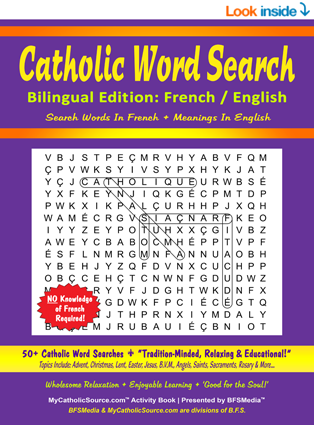
Absolutely NO Knowledge Of
French Is Required!
50+ Catholic Word Searches ~ "Tradition-Minded,
Relaxing & Educational!"
Topics Include: Advent, Christmas, Lent,
Easter, Jesus, B.V.M., Angels, Saints, Sacraments, Rosary & More...
"Perfect For Catholic Teens & Adults!" ~ "Great
For Home Schoolers!"
Fun for any time! Also great for...
* Planning a Catholic pilgrimage to France
* Learning some (or brushing up on some) French
words
* Increasing your French vocabulary
* Adding fun to a homeschool curriculum
* Enjoying a unique challenge, even if you
don't speak a word of French!
Free Sample Here
Get Your Copy Today!
Why Learn French?
Click link or image above for more information & to purchase.
Now Available!
4
Great Inspirational Catholic Coloring Books...
Plus These Handy Coloring Books & Resources...

Lots of Love Coloring Book (Vol.1) - 40 Love-Themed / Affirming Coloring Pages (Easy/Fairly Easy) - "Includes a Variety of Coloring Pages Suitable for Children or Adults!" ~ "Great for Sharing!"

My Colors - Easy & Convenient Color Sample
Sheets ~ Coloring Resources Book: 125+ Assorted Color Sample Sheets - "Perfect
For Testing, Selecting & Organizing Pen, Marker, Pencil or Crayon Colors!"
My Colors 2 - Easy & Flexible Color
Combination Grids ~ Coloring Resources Book: 50+ Color Sample Sheets In 3 Grid
Sizes - "Perfect For Previewing, Testing & Selecting Pen, Marker, Pencil Or
Crayon Color Combinations!"
[Please Note: Proceeds from sales of these books may support My Catholic Source.com]
For More Information & To
Purchase, Click Image(s) Above
Click Here For Coloring Examples
Now Available!
700+ Consoling Thoughts From Holy Scripture
"Inspirational & Uplifting!"
"Some of the most consoling
& comforting words from Holy Scripture, all in one place!"
+ + +
Compiled From Traditional Catholic Scripture
(Douay-Rheims Translation)
Get it today!
+ + +
For More Information & To
Purchase, Click Link Below...
Kindle Version Just $7.99
Notice: Prices are subject to change
without notice and do not include any applicable taxes.
Now Available!
The iStations Book - Stations of the Cross
Two Traditional Way of the
Cross Methods for Catholics Based on Our 'Best Selling' App
Features beautiful images, TWO traditional
methods, including a Franciscan method, selected prayers in English & Latin
Get it today!
For More Information & To
Purchase, Click Link Below...
Kindle Version Just $4.99
Notice: Prices are subject to change
without notice and do not include any applicable taxes.
Now Available!
Catholic Annual Prayer Book
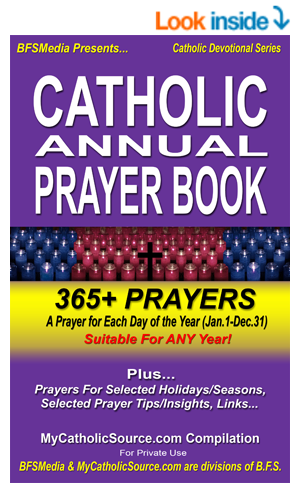
Includes: 365+ Daily Prayers (Jan.-Dec.);
Holiday / Seasonal Prayers; Hundreds of Prayers Indexed by Title;
Nearly 200 Aspirations / Short Prayers; Over 100 Latin Prayers & Aspirations; 500+
Topics for Meditation; Hundreds of Prayer Tips & Insights; And More...
Includes prayers drawn from Holy Scripture, the
liturgy, writings of popes & saints, the Raccolta, the Roman Breviary, the Roman
Missal, etc.
A daily prayer companion for
Catholics that is 'suitable for any year'!
Kindle Version Just $8.99
Notice: Prices are subject to change
without notice and do not include any applicable taxes.
Click Here to Buy
Now Available!
Coloring Book For Catholics: 50+ Latin
Prayers
(Beginning - Intermediate - Advanced)
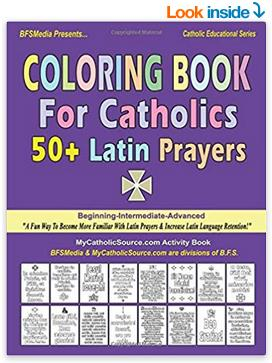
"This 'unique', tradition-minded coloring book
which contains some of the most popular Catholic prayers in Latin is a fun way
to become more familiar with Latin prayers & increase Latin language retention!"
This 'educational & fun' publication is useful
for prayerful relaxation, educational recreation ('learn while you play'),
becoming more familiar with Latin prayers & hundreds of Latin words, learning or
memorizing Latin prayers, increasing Latin retention, and more...
An enjoyable and
instructive tool with respect to Latin (the 'beautiful & majestic language of
heaven' and 'official language of the Church' - a language 'consecrated' by the
inscription on the Cross that helps to foster a universal bond in prayer with
Catholics around the world), this publication is suitable for Catholics of most any
age.
+ + +
"This Catholic coloring book
- which provides hours of wholesome & educational recreation - is so much better
for your soul than television!"
+ + +
Notice: Prices are subject to change
without notice and do not include any applicable taxes.
Click Here to Buy
Now Available!
My Little Latin Mass Coloring Book

25+ Traditional Latin Mass Coloring Images For Children Or Adults [Low
Mass]
"Enjoyable & Educational!"
+ + +
Notice: Prices are subject to change
without notice and do not include any applicable taxes.
Click Here to Buy
Catholic Classics Reprint Now Available!
In Heaven We Know Our Own - Or, Solace for
the Suffering
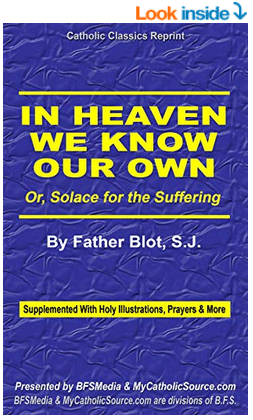
This 'Catholic Classic', which offers consoling
'proof' that the faithful departed remember, love & care for those in heaven and
for those still remaining on earth, is a "great balm of comfort" to those who
have lost a spouse, child, parent, friend, or other loved one. "A thoughtful
bereavement gift, and a 'must-have' for grieving Catholics!"
Get your copy today!
For More Information & To
Purchase, Click Link Below...
Kindle Version Just $2.99!
Notice: Prices are subject to change
without notice and do not include any applicable taxes.
Now Available!
Setting The Record Straight About Luther
Important Things Catholics Should Know About
The 'Reformer'
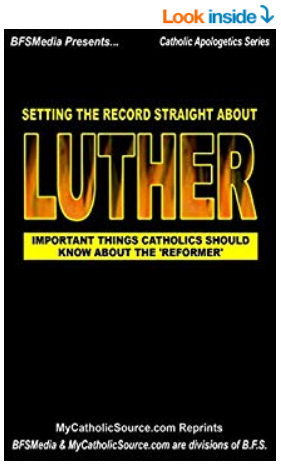
Don't miss this
'eye-opening' treatise concerning Martin Luther, the catalyst / leader of the
' Reformation ' (a.k.a. Protestant Rebellion)
Includes: Facts which demonstrate that Luther
was NOT sent by God, Luther received approval of his teaching from Satan,
Luther's misbehavior, some results of Luther's teachings, Luther admits he could
be wrong, and more...
Get your copy today!
For More Information & To
Purchase, Click Link Below...
Kindle Version Just $5.99
Notice: Prices are subject to change
without notice and do not include any applicable taxes.
Now Available!
BIG Book of Latin Activities For Catholics
Beginning - Intermediate (Vol. 1)
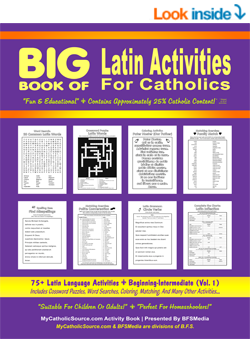
"Suitable For Children Or
Adults!" ~ "Perfect For Home Schoolers!"
+ + +
As many faithful Catholics already know,
the majestic
Latin language – the 'official language' of the Catholic Church –
promotes unity, helps safeguard the purity of doctrine, connects us with
our Catholic ancestors, allows us to pray in "one voice", and even ties
back to the inscription on the Cross which was written in Hebrew, Latin,
and Greek. The Latin language is still used today in the precious
treasure that is the
Traditional Latin ('Tridentine') Mass, in 'everyday speech' (much of
English is derived from Latin), in mottos, in specialized fields, and in
educational endeavors. It has been shown that the study of Latin brings
many benefits. "And, Latin is truly the language of heaven!"
If you enjoy Latin, you may be glad to know that
this full-sized (8.5" x 11"), tradition-minded publication features an
assortment of activity types related to Latin (including: word searches,
crosswords, coloring activities, challenges, fill-ins, spelling bee,
quizzes, unscrambles, true/false, multiple choice, matching, cross-offs,
circling, word associations, translation exercises, and more...), and
treats of various topics (including: common Latin words, Latin language
facts, Latin grammar, nouns & verbs, abbreviations,
phrases / sayings / mottos, prefixes, cardinal numbers, grammatical gender,
inflection, word roots, diacritics / accenting, pronunciation, Latin
prayers / hymns, Scripture verses, Catholic phrases, and more...).
+ + +
" Fun & Educational! "
Get Your Copy Today!
Click Here For More Information & To Purchase
Now Available!
Activity Books For Kindle Scribe

Write-On Books For Scribe!
Click Here For More Information
Try Here For Great Catholic Apps!
My Crucifix
For the iPad®, iPhone®,
and iPod touch®...

For the iPad®...




And Other Great Apps...




More My Catholic Source.com Media: Books & Ebooks
|
|
|
|